On this page
Quick answer: The best skincare UGC video ideas for a beginner are hands-only samples that show texture, application and routine, not results: a texture macro, a sunblock white-cast test, a face wash foam test, a dropper routine, a night routine flatlay. Film in 9:16 with three hook takes and timed shots. Never show before-and-after results or claim to cure acne, lighten skin or remove marks.
Skincare is the category brands most want UGC for, and the one where beginners most often get it wrong. Not on the filming. On what they say.
We read the pages ranking for skincare UGC video ideas on 18 November 2026. The top results are mostly Fiverr and Contra gig pages, an AI template gallery, a 2023 list that still recommends before-and-after transformations, and one decent 800-word post that assumes you'll be on camera and only mentions US rules. None gives a timed shot list. None is built for someone who'd rather not show their face. And none mentions a single thing about filming skincare in Pakistan, where your audience deals with summer sun, hard water and wedding season, and where "gora" creams are still sold online.
So here are ten faceless skincare ideas, each with a timed shot list, three hooks (some in Roman Urdu) and what a brand would actually reuse. Then the part most guides skip: the claims you must never make, sourced to the platforms' own policies. No brand names on purpose. Use whatever is on your shelf.
Why skincare suits faceless UGC
A skincare video is mostly about texture, how a product spreads, how it sits on skin, and how it fits a routine. All of that is visible on a hand, a wrist or the back of an arm. Brands also like hand-only footage for a practical reason: it's easy to cut into ads, it doesn't tie the product to one face, and it works across audiences.
Faceless also protects you. Skin on camera invites "it worked on her" comparisons, which is exactly the kind of implied result claim that gets ads rejected. A wrist doesn't promise anything.
How each shot list below works
Every idea follows the same pattern, so you can batch-film:
- Length: 20 to 40 seconds, 9:16, filmed at the highest quality your phone allows.
- Hooks: three separate takes of the first 2 to 3 seconds. Brands test hooks; giving three makes your sample look like you know that.
- Clean version: export one version with no music and no captions as well. Brands add their own.
- Timings are guides. Real takes run long; trim in the edit.
If you're new to hooks, TikTok hooks in Urdu has patterns that translate well to product videos.
10 skincare UGC video ideas with shot lists
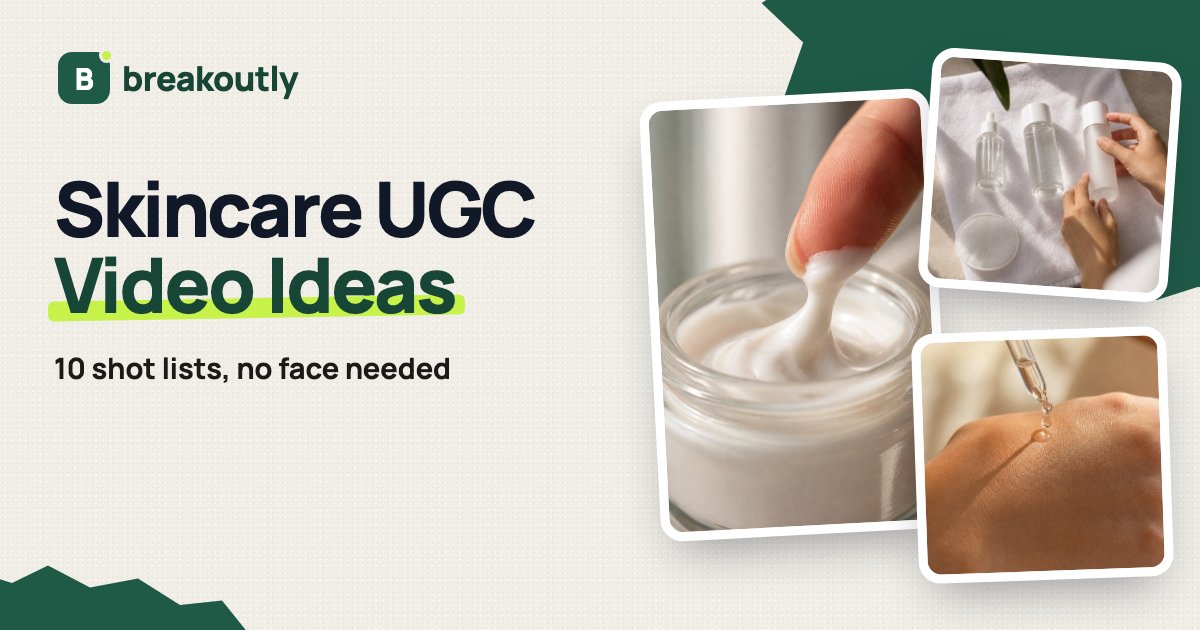
1. The texture macro (any cream, gel or serum)
The simplest, most reused shot in skincare ads. Brands use texture clips as B-roll in nearly everything.
- 0 to 3s: hook. Close-up of the closed jar or tube, finger taps the lid.
- 3 to 8s: open it slowly, macro shot of the surface.
- 8 to 15s: scoop with a clean spatula or fingertip, hold it toward the light.
- 15 to 25s: spread on the back of the hand in one slow stroke, then rub in.
- 25 to 30s: the hand turns in window light to show finish (matte, dewy, sticky or not).
Hooks: "Texture check, no filter." / "Ye cream chipchipi hai ya nahi? Dekhiye." / "If you hate heavy creams in summer, watch the last second."
2. The sunblock white-cast test (sunscreens)
Sunblock is a year-round need in most of Pakistan, and white cast is the first thing buyers ask about.
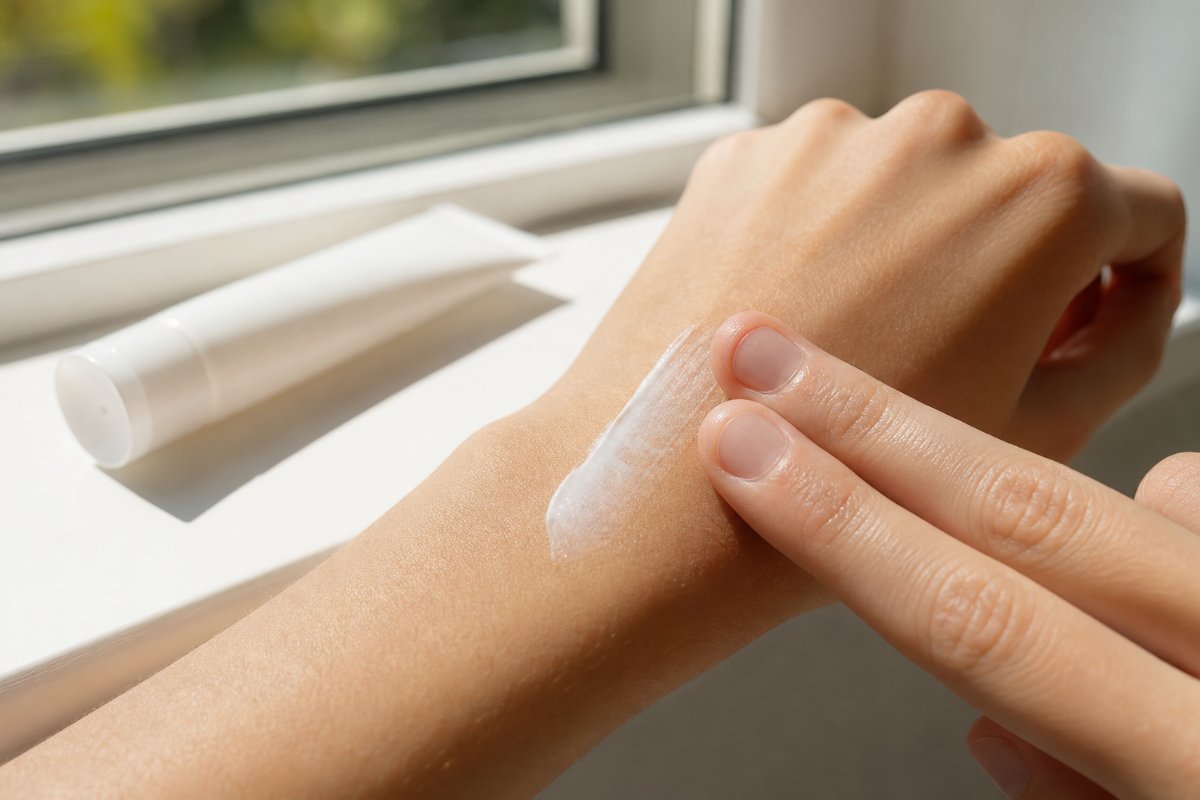
- 0 to 3s: hook over a line of sunscreen on the back of your hand or forearm.
- 3 to 12s: rub it in with two fingers, in real time, no cuts.
- 12 to 20s: hold the arm in direct daylight, turn it slowly.
- 20 to 28s: show the product next to the arm, label facing camera (the SPF number is the brand's claim, not yours; don't repeat it as if you tested it).
- 28 to 32s: end on the arm in shade, so viewers see both lights.
Hooks: "White cast test in Lahore sun." / "Sunblock lagate hi chehra safed ho jata hai? Ye dekhein." / "Real-time rub-in, no speed-up."
3. The face wash foam test (cleansers)
- 0 to 3s: hook. One pump onto wet fingertips.
- 3 to 10s: lather between palms, close-up on foam.
- 10 to 18s: overhead of the sink as water rinses the foam away (tap water, no filter).
- 18 to 25s: pat the hand dry with a towel, then touch the skin to show it doesn't squeak.
- 25 to 30s: product placed on the sink edge, slightly out of focus.
Hooks: "Does it foam with hard water? Let's see." / "Ek pump kitna kaafi hai?" / "Gentle or stripping? The towel test."
Hard water is common in many Pakistani cities, so a foam test with your own tap water is genuinely useful to a buyer, not just pretty.
4. The dropper routine (serums)
- 0 to 3s: hook. Dropper lifts out of the bottle, one drop falls back.
- 3 to 10s: count the drops onto your fingertips, slowly.
- 10 to 18s: press into the back of the hand or wrist, show absorption.
- 18 to 26s: where it sits in the routine: cleanser, then this, then moisturiser, each product placed down in order.
- 26 to 30s: the three bottles in a row, the serum in focus.
Hooks: "How many drops do you actually need?" / "Serum pehle ya moisturiser pehle? Order ye hai." / "The routine order most people get wrong."
5. The night routine flatlay (multi-product brands)
- 0 to 3s: hook. Overhead of an empty towel or tray.
- 3 to 15s: hands place each product one by one, in routine order, with a soft tap on each.
- 15 to 25s: quick application of each on the back of the hand, 2 seconds per product.
- 25 to 30s: lights dim, a bedside lamp turns on over the finished flatlay.
Hooks: "My 3-step night routine, no face, no fuss." / "Raat ki routine 2 minute mein." / "Everything I use before bed, in order."
6. The rose water toner spritz (toners and mists)
Gulab jal is in a lot of Pakistani homes already, which makes this a natural format for any toner or mist brand.
- 0 to 3s: hook. Slow-motion spritz into window light.
- 3 to 10s: spritz onto a cotton pad, close-up on the pad soaking up.
- 10 to 18s: pad swipes across the back of the hand.
- 18 to 25s: the bottle on a shelf next to a small plant or a steel tray.
- 25 to 28s: one final spritz in slow motion for the loop.
Hooks: "Gulab jal routine, upgraded." / "Toner kaise lagate hain, cotton pad ya haath?" / "The most satisfying 3 seconds in skincare."
7. The winter lip balm test (lip care)
- 0 to 3s: hook. Balm swiped across the back of the hand, one stroke.
- 3 to 10s: macro on the swatch: shine, thickness.
- 10 to 18s: rub with a fingertip to show how it melts.
- 18 to 25s: a wool shawl or jacket sleeve enters frame, balm goes into the pocket.
- 25 to 28s: product on a window sill with cold morning light.
Hooks: "Winter lips? Swatch test first." / "Sardiyon ke liye balm, chipchipa ya nahi?" / "Pocket-sized test."
8. The ingredient label read (any product with a clear INCI list)
This one builds trust because you're reading, not claiming.
- 0 to 3s: hook. Thumb points at the ingredient list.
- 3 to 15s: slow pan across the label while your voiceover names the first few ingredients and what the brand says they're for.
- 15 to 22s: texture swatch on the hand.
- 22 to 30s: product placed down, text on screen: "What the brand says it's for" (not "what it does").
Hooks: "Reading the label so you don't have to." / "Is mein kya kya hai? Label parhte hain." / "The first five ingredients matter most."
Be careful with voiceover here: say "the brand says niacinamide is for X", not "this will fix X".
9. The wedding season prep (masks, clay, ubtan-style powders)
Shaadi season is a real content calendar moment for skincare brands in Pakistan.
- 0 to 3s: hook. A bowl, a spoon, the powder or mask product, mehndi-green or gold fabric in the background.
- 3 to 12s: mix the mask in the bowl, close-up on texture.
- 12 to 20s: apply a stripe on the back of the hand or forearm with a brush.
- 20 to 26s: a timer on the phone (screen face down or blurred), then the rinse.
- 26 to 30s: the product beside wedding bangles or a folded dupatta.
Hooks: "Shaadi se pehle ki skincare, bina drama." / "Mask texture test before the mehndi." / "Weekend prep for wedding season."
Never say it will "brighten", "lighten" or make you "fair for the wedding". More on that below.
10. The one-week diary (any product you can genuinely use daily)
The most honest format, and brands love it because it shows real use, not results.
- 0 to 3s: hook. Day 1 on screen, product unopened.
- 3 to 20s: quick clips from days 1, 3, 5 and 7: the bottle getting emptier, your notes on texture, smell and how it felt to use.
- 20 to 28s: final verdict in your own words: what you liked and one thing you didn't.
- 28 to 30s: product on the shelf with the others in your routine.
Hooks: "I used this every day for a week. Here's what I noticed." / "7 din, ek product, honest notes." / "Not a results video. A real-use video."
Notice what's missing: no close-up of your skin "before" and "after". You're reporting use, not outcomes.
A home setup that's good enough
You don't need a ring light to start. You need:
- A window with indirect daylight, filmed in the morning or late afternoon.
- A plain surface: white sheet, marble-look contact paper, a wooden board.
- A phone clamp or a stack of books to hold the phone steady for overhead shots.
- Clean, trimmed nails and no strong nail colour unless it fits the brand.
- Beauty filters and skin-smoothing off. Filters on skin make any texture shot misleading.
Film a texture shot both in daylight and with a warm lamp, so the brand can choose. That alone makes a sample look more professional than most.
Claims you must never make in skincare UGC
This is where skincare differs from food or tech. Brands run good UGC as paid ads, so your sample should already pass ad rules. TikTok's ad policies are public and specific.
TikTok's misleading and false content ad policy (last updated November 2026) prohibits product effect comparisons such as before-and-after results, and says ads must not promise or exaggerate a product's effect. Its healthcare and pharmaceuticals ad policy (last updated September 2026) says cosmetics must not make medical claims and gives examples that aren't allowed: claims to remove or cure acne, remove wrinkles or treat hair loss, and promises of permanent changes to the body.
In practice, never say or write:
- "Acne khatam", "cures pimples", "clears acne in 7 days"
- "Removes dark spots", "melasma gone", "pigmentation fix"
- "Gora", "fair", "whitening", "lightens skin tone"
- "Permanent results", "guaranteed", "100% works"
- "Dermatologist approved" or "doctor recommended" unless the brand sends written proof and wants it said
- "Chemical-free" (everything is chemicals) or "100% natural" unless the brand documents it
- Any SPF, PA or percentage as if you tested it yourself
- Any before-and-after of your skin, or anyone's
What you can say: how it feels, smells and spreads, how fast it absorbs, how it fits your routine, how much you use, what the label says, and what the brand says it's for, attributed to the brand.
Two Pakistan-specific red lines:
Skin-lightening products. The WHO fact sheet on mercury and health (24 October 2024) says mercury-containing skin-lightening products are hazardous, banned in many countries, and still advertised online. If a product promises to make skin fairer and has no clear ingredient list or registration, don't film it, whatever the fee. Your name stays on that video.
Medicines sold as skincare. Under the Therapeutic Goods (Advertisement) Rules, 2025, promotion of therapeutic products, including on digital platforms, needs prior approval from DRAP's advertisement board, as Profit reported in February 2025. If a brand's "cream" is actually a medicine (prescription acne or pigmentation treatments, for example), it isn't a normal UGC job. Ask the brand whether the product is registered as a drug and whether the ad is approved. If they don't know, pass.
Safety before you film
- Patch test first. Apply a small amount on the inner arm and wait at least a day before using it more widely.
- Use it for a week before you film anything that sounds like an opinion. Texture shots can be filmed on day one; verdicts can't.
- Check the expiry and seal. Don't film a product with a broken seal or no batch number.
- Read the full ingredient list for anything you're allergic to.
- Disclose. If the product was gifted or paid, TikTok's Branded Content Policy requires the commercial content disclosure toggle on your post.
Research before you shoot
Not every format works for every product. Before you film, look at what's already working. In Discover you can search terms like "sunblock" or "skincare routine", filter by language, and see which videos are outliers against their creator's own median views, with the formula and data freshness on every number. Save the best references to Saved, and use Studio to draft three hook options and a script in English, Urdu, Roman Urdu or another language. If a few skincare creators keep producing outliers, add them in Tracking so you see their new uploads without searching again.
Turning samples into paid work
Film three or four of these with products you already own, and you have a skincare portfolio. Our UGC portfolio guide for beginners shows how to present them. If you've already filmed food, pair them with the shot lists in food UGC video ideas to show range.
When a skincare brand offers product only, run it through barter vs paid collaboration before you say yes. And when they ask to run your video as an ad or want your raw files, read UGC usage rights for beginners and price those separately.
One honest opinion: the skincare samples that win paid work are rarely the prettiest. They're the ones a brand's ad team can run tomorrow without a compliance check. Film for that.
FAQ
What are good skincare UGC video ideas for beginners?
Start with formats that show product, not results: a texture macro, a sunblock white-cast test, a face wash foam test, a serum dropper routine, a night routine flatlay and a one-week use diary. Each works with hands only, takes under an hour to film, and gives brands footage they can cut into ads.
Can I make skincare UGC without showing my face?
Yes. Most skincare footage brands reuse is hands, wrists and products: texture swatches, application, rinse shots and routine flatlays. Faceless videos also avoid implied before-and-after results, which TikTok's ad policies prohibit. Use window light, turn beauty filters off, and give three hook takes so the brand can test openings.
Can I show before and after results in skincare UGC?
Avoid it. TikTok's misleading content ad policy prohibits product effect comparisons such as before-and-after results, and brands usually run good UGC as ads. Show use instead: texture, application, absorption and how the product fits your routine. A one-week diary that reports how it felt to use is honest and still persuasive.
What claims should I avoid in skincare UGC?
Never claim a product cures acne, removes dark spots or wrinkles, lightens or whitens skin, or gives permanent or guaranteed results. TikTok says cosmetics ads must not make medical claims. Don't repeat SPF numbers, "dermatologist approved" or "100% natural" unless the brand gives written proof and you attribute it to the brand.
How long should a skincare UGC video be?
Most skincare UGC samples work at 20 to 40 seconds in 9:16, with the product visible in the first three seconds. Film three versions of the hook and send a clean export without music or captions as well. Brands often cut shorter 6 to 15 second ads from a longer sample, so give them clean shots to work with.
By Breakoutly Research
Breakoutly researches short-form video for creators outside the US. Every article cites its sources and is checked by a person before it goes live.