On this page
- Barter, gifted and paid: what each one really means
- What the data says about barter deals
- The 5-question test before you say yes
- Value math in rupees: what a "free" product costs you
- When a barter deal must become paid
- Reply scripts you can copy
- Disclose barter posts, every time
- Pakistan specifics nobody else covers
- Track which barter deals actually pay off
- Moving from barter to paid
- FAQ
Quick answer: In a barter vs paid collaboration choice, take barter only when you would buy the product anyway, the brand asks for one organic video you post yourself, and you keep the rights. The moment a brand wants ads, raw files, a deadline you can't move, exclusivity or reshoots, it is paid work. Say yes with the scope in writing, or reply with a price.
A brand sends you a DM: "Love your content! We'd like to send you our new serum in exchange for a video." No fee. Just product. Do you take it?
Most pages that rank for barter vs paid collaboration won't help you decide. We read them on 18 November 2026. Nearly all of them are written for brands ("which is cheaper for your marketing budget?") or they're a marketplace selling its own campaigns. The best creator-side page we found is solid but built around US rules and dollar prices. Not one gave a simple rule you can apply in two minutes, a reply you can copy, or anything about filming for a brand from Lahore or Karachi.
So this post does three things. It gives you a five-question test for any product-only offer. It shows the math in rupees, so you can see what a "free" serum actually costs you. And it hands you reply scripts in English and Roman Urdu for every case: accept, counter, decline and the sneaky usage-rights ask.
Barter, gifted and paid: what each one really means
People mix these words up in DMs, so pin them down before you reply.
| Deal type | What you get | What they expect | Who carries the risk |
|---|---|---|---|
| No-strings gift (PR package) | Product | Nothing required, a post is hoped for | Brand |
| Barter | Product | A specific piece of content, often by a date | Mostly you (your time) |
| Paid | Fee (sometimes plus product) | Agreed deliverables, rights, timeline | Shared, set in writing |
| Reimbursement | You buy first, they pay you back later | Content plus proof of purchase | You (your money and time) |
The difference between a gift and barter matters more than it looks. A gift arrives with no deal attached. You can post if you love it, or not. Barter is a job paid in product: you owe them content. If someone calls it a "gift" and then sends you a brief with a deadline, it's barter. Treat it that way.
Reimbursement deals deserve a warning of their own. You spend your money first and trust a stranger to pay you back. For a beginner in Pakistan, where most small brands you'll meet sell on Instagram and Daraz with no public company details, that's a risk with no upside over a normal gift. Skip them unless you already know the brand.
What the data says about barter deals
There isn't much hard data, and none of it is from Pakistan. The most useful numbers come from Modash, an influencer marketing tool that surveyed brand marketers and interviewed creators in 2026. Treat these as signals, not laws.
In a May 2026 Modash write-up on barter deals versus no-strings gifting, marketers said creators accept barter offers only about 36% of the time, and 7 in 10 marketers said barter gets noticeably fewer replies than a no-strings gift. Yet among brands using barter, about half of barter collabs ended with a post, versus 43.8% for no-strings gifts. The article doesn't state the survey's sample size.
The Modash creator gifting survey from June 2026, based on conversations with 25 creators, adds the creator side: about 6 in 10 brand offers in their inboxes were gifting, over 8 in 10 said barter deals usually ask for Stories plus a full video, and 4 in 10 said usage rights are off the table unless paid.
What does that tell you? Two things. First, saying no to barter is normal. Most creators do it most of the time, so you won't burn a bridge by being choosy. Second, brands know barter is a weak offer. That's why they send so many. Your reply is the start of a negotiation, not a yes-or-no exam.
The 5-question test before you say yes
Run every product-only offer through these five questions. If any answer is "no", either counter with a fee or decline.
1. Would you buy this product with your own money? Not "is it nice". Would you spend your rupees on it this month? If not, the product isn't payment, it's clutter. And you'll make a weaker video about something you don't care about. The Modash survey found product quality was the top reason creators who accepted gifts never posted.
2. Does it fit what you already post? A tech accessories account posting a lip tint confuses your viewers and the algorithm. One off-niche barter post can pull your next few videos' reach down because the audience it attracts doesn't come back. If you're still building a niche, read how to grow a new TikTok account in Pakistan before taking anything off-topic.
3. Is the ask one organic video on your own account? One video, posted by you, with your caption. That's the fair size for product only. Two videos, Stories, a carousel, a "story set" and a follow-up post are a paid package.
4. Do you keep the rights? If they want to run your video as an ad, put it on their website or get your raw files, that's paid. More on this below.
5. Is the timeline yours? "Post within two weeks of receiving it" is fine. "Post on the 23rd at 8 pm, send a draft by the 20th, two rounds of changes" is a production schedule. Schedules cost money.
Five yeses? Take it, and enjoy the product. Anything less, keep reading.
Value math in rupees: what a "free" product costs you
Here's a worked example. The numbers are illustrative, not market rates: plug in your own.
A skincare brand offers a serum that sells for Rs 2,800. They want one 30 to 45 second TikTok, a voiceover and on-screen text.
Your time, honestly counted:
- Unboxing and testing the product for a week so you're not lying on camera: 1 hour spread out
- Script and hook options: 45 minutes
- Filming three hook takes, B-roll and demo: 1.5 hours
- Editing, captions, cover text: 1.5 hours
- Revisions if they ask: 30 minutes to 2 hours
That's roughly 5 to 7 hours. Divide Rs 2,800 by 6 hours and you're working for about Rs 470 an hour, paid in serum. Is that fine? Maybe, if you'd have bought it anyway and the video goes into your portfolio. But if the product is something you'd never buy, its "value" to you is close to zero, and you've worked a full day for free.
Now change one thing: the brand wants to run your video as a paid ad for three months. Your hours are the same, but the video is now working for them in their ad account, bringing them sales every day. The serum hasn't changed price. The deal has.
That's the core of barter vs paid collaboration for creators. Product can pay for your effort on your own page. It can't pay for your content working on their page.
When a barter deal must become paid
These are the red lines. If a product-only offer includes any of them, reply with a price or decline.
- Paid usage or ads. Running your video as a Spark Ad, a partnership ad on Instagram, or a dark-post ad. If they ask for a Spark Ads code, read what a Spark Ads code means for UGC creators first: it lets them put money behind your post.
- Raw files or no-watermark exports. Raw footage means they can recut your video into as many ads as they want.
- Content they post, not you. UGC that lives on their account is a service, not a collab. That's paid UGC.
- Exclusivity. "Don't work with any other skincare brand for 3 months" means you lose real paid offers. That must be paid.
- A fixed date, drafts and revision rounds. Production terms mean a production fee.
- Multiple deliverables. Video plus Stories plus a post. One product doesn't pay for three pieces.
- Claims you can't stand behind. "Say it removes pigmentation in 7 days." No amount of product makes that okay. Decline.
Usage rights are the most common trap, and the Modash interviews back this up: plenty of creators are happy to post for product, far fewer will hand over rights for it.
Reply scripts you can copy
Keep replies short, warm and specific. Never just say "I don't work for free" and stop: it reads rude and ends the conversation. Say what you can do.
1. Accept, with the scope in writing
Hi [name], thanks for thinking of me! I'd love to try [product]. Happy to do one organic TikTok on my account within 2 to 3 weeks of receiving it, posted with the branded content label on. Usage stays organic: if you'd like to run it as an ad later, we can agree a fee then. Could you confirm that works and send it to [city]?
Roman Urdu version:
Assalam o alaikum [name], shukriya! Mujhe [product] try kar ke khushi hogi. Main apne account par 1 organic TikTok bana doon gi/ga, product milne ke 2 se 3 hafte ke andar, branded content label ke saath. Ad mein use karna ho to baad mein fee tay kar lenge. Confirm kar dein aur [city] bhej dein.
2. Counter with a paid option
Thanks for the offer! For product-only I can do one organic video on my account. Since you mentioned [Stories / a deadline / two videos], that's a paid package: [deliverables] is Rs [your price], product included. Happy to send a sample from my portfolio. Which works better for you?
Giving both options lets them say yes to something. Many small brands pick the barter version, and that's fine: you've protected your time.
3. When they ask for usage rights on a barter deal
I'm happy to post for product, but ad usage and raw files are priced separately because the video keeps working for you after it's posted. Organic post: product only. Ad usage for [30/60/90] days: Rs [price]. Raw files: Rs [price]. Let me know which you'd like.
Roman Urdu:
Product ke badle organic post main kar deti/deta hoon. Lekin ad mein chalana ya raw files dena alag charge hota hai, kyun ke video post ke baad bhi aap ke liye kaam karti hai. [30/60/90] din ad usage: Rs [price]. Raw files: Rs [price].
4. Decline, and keep the door open
Thank you so much for reaching out. I'm only taking product-only collabs in [your niche] right now, so I'll pass on this one. If you plan a paid campaign later, I'd love to hear about it. My rates and portfolio are here: [link].
Save these in your phone's notes. If you're the one reaching out first, the pitch side is covered in how to pitch brands for UGC in Pakistan.
Disclose barter posts, every time
"It was free, so it's not an ad" is wrong on TikTok, and wrong in most places.
TikTok's Branded Content Policy (effective date shown as 30 October 2026) defines branded content as promoting a brand in exchange for payment or any other incentive, and lists a product gifted to you by a brand as an example. When you post branded content, it says you must turn on the commercial content disclosure toggle. So a barter video needs the label, exactly like a paid one.
If your video can reasonably reach viewers in the United States, the FTC's Disclosures 101 for influencers also says free or discounted products count as a material connection that must be disclosed, and that US rules can apply to posts made from other countries. We couldn't find a Pakistan-specific influencer disclosure rule as of November 2026, so follow the platform rules: they apply to you wherever you post from.
Put the toggle on, and add "#gifted" or "PR" in the caption too if you like. Brands that ask you to hide the label are asking you to break the platform's rules, which is a good reason to walk away.
Pakistan specifics nobody else covers
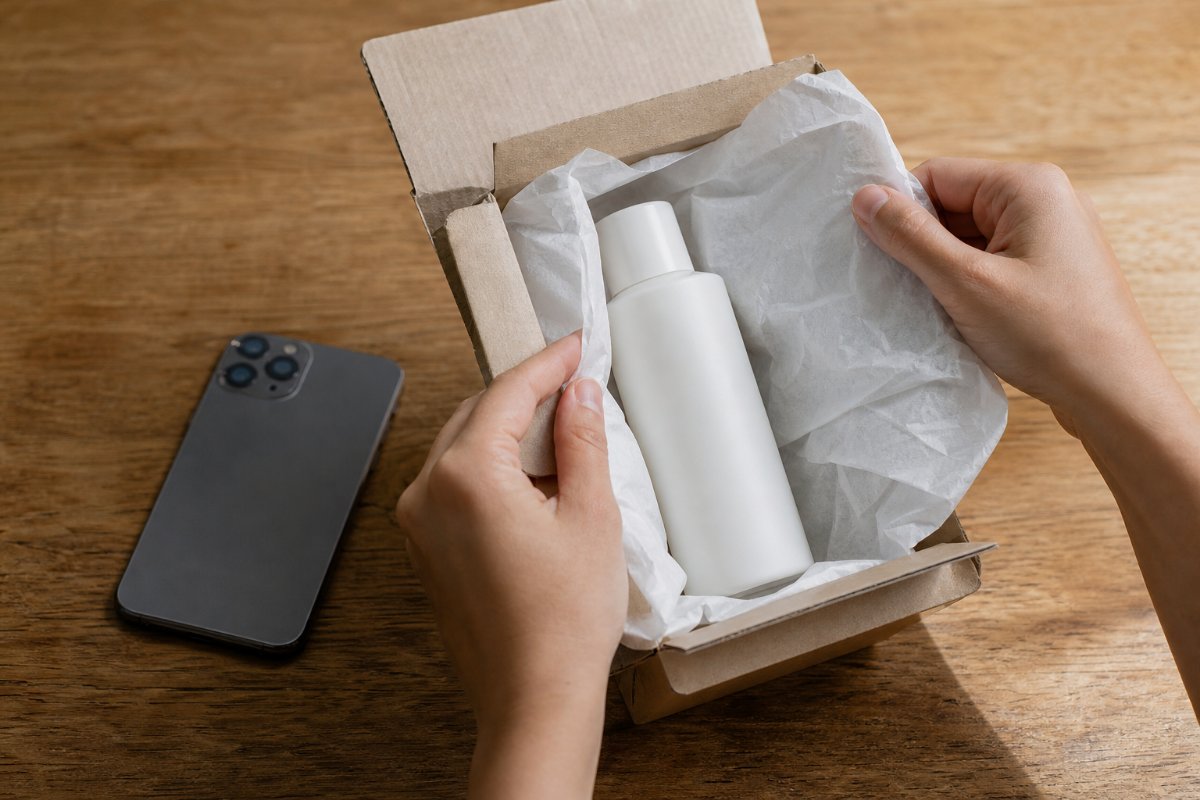
A few practical things matter here more than on US-focused pages:
No COD for barter. If a "free" product arrives cash on delivery, it isn't free. Ask the brand to prepay courier charges, or say no.
Get the scope before the parcel. Once the product is at your door, you'll feel you owe them. Confirm the deliverable in a WhatsApp message or email before you send your address. A screenshot is your contract for small deals.
Use a pickup address you're comfortable sharing. Many creators use an office or a family shop address rather than home.
Test before you talk. Use a skincare product for at least a week before you film. Spot-test first. Never repeat health or results claims the brand hands you if you haven't seen them yourself.
Return policy. If the product is damaged or not what was promised, tell the brand, and you're not obliged to post a positive video about it. Your audience's trust is the asset.
Track which barter deals actually pay off
Barter is worth it when it leads somewhere: a portfolio piece that wins a paid client, or a brand that comes back with a budget. You won't know which unless you track it.
Keep a simple sheet: brand, date, product value, hours spent, views after 7 days, and whether the brand came back. After ten deals, look at the column on the right. If no brand has ever come back with money, you're doing free advertising, and it's time to say no more often.
On the research side, it helps to know what's already working in a category before you film. In Discover you can search a niche like "skincare" and filter by language to see which videos are outliers, meaning far above the creator's own median views, with the formula and the data's freshness shown on every number. Save the strongest references to Saved, and use Studio to draft your hook options and script in English, Urdu or Roman Urdu before you shoot. If a brand's own creators keep posting about a product, add those creators in Tracking so you see their new videos without searching again.
Moving from barter to paid
You don't need a huge following to start charging. You need proof. Most creators who make the move do some version of this:
- Do two or three barter deals you'd genuinely say yes to, and make them your best work.
- Put them in a portfolio with real numbers (views, saves, comments) and a one-line result. Our UGC portfolio guide for beginners shows the layout.
- From then on, reply to every product-only offer with both options: organic for product, or a paid package. Let the brand choose.
- Raise the paid price after every three clients who say yes without pushing back.
- Look for brands that already pay creators. Their ads are public: finding brands for UGC with the Meta Ad Library explains how to spot brands running creator ads right now.
If you're starting from zero, the full path is in how to become a UGC creator in Pakistan. And if you're weighing tools for research, our plans are flat priced with no credits: see pricing.
One opinion to end on: the creators who get paid fastest aren't the ones who refuse all barter. They're the ones who take a few great barter deals on purpose, with written scope, and then stop.
FAQ
Is a barter collaboration worth it for a new creator?
Yes, sometimes. A barter collaboration is worth it when you would buy the product anyway, it fits your niche, and the brand asks for one organic video on your own account with no ad usage. Two or three of those build a portfolio. After that, offer brands a paid option alongside product-only, so barter stays your choice, not your default.
What is the difference between barter and paid collaboration?
In barter, the brand pays you in product in exchange for agreed content. In a paid collaboration, the brand pays a fee for set deliverables, timeline and rights, sometimes with product too. A no-strings gift is different again: product with no content required. Anything that asks for ads, raw files or exclusivity belongs in a paid deal.
Do I need to disclose a barter collab on TikTok?
Yes. TikTok's Branded Content Policy lists a product gifted to you by a brand as branded content and says you must turn on the commercial content disclosure toggle when you post it. If US viewers can reasonably see your post, the FTC also treats free products as a connection that must be disclosed.
How do I reply when a brand only offers free product?
Thank them, then give two options: one organic video on your account for product only, or a paid package with the extras they asked for, at your price. Never reply with only "I don't work for free". Giving a clear, smaller barter scope plus a priced option usually gets a better answer than a flat no.
Can a brand use my barter video in ads?
Only if you agree. Organic posting for product does not include ad usage, raw files or posting on the brand's own account. If a brand wants any of those, quote a separate fee for each and put the duration in writing, for example 30, 60 or 90 days of ad usage.
By Breakoutly Research
Breakoutly researches short-form video for creators outside the US. Every article cites its sources and is checked by a person before it goes live.